Top Basketball Sportsbooks for NBA Betting in the UK
 Available in US
Table of Contents
- Comparing Basketball Moneylines and Bookmaker Markets
- NBA Bet Types: From Moneyline to Parlays
- NBA Player Prop Betting Guide
- NBA Futures: Championship, MVP and More
- In-Game NBA Betting Strategies
- Proven NBA Betting Strategies for Success
- Managing Your NBA Betting Bankroll
- When to Bet: NBA Calendar Breakdown
- Frequently Asked Questions About NBA Betting
- Conclusion
The NBA betting market has evolved into one of the most dynamic and lucrative arenas in sports wagering. With an 82-game regular season, a playoff marathon that can stretch into June, and countless player performance variables, basketball offers bettors more opportunities than almost any other major sport. Whether you want to predict the next champion before the season tips off or bet on how many assists a point guard will dish out tonight, the NBA provides a betting canvas that rewards both casual fans and serious handicappers.
This guide walks you through everything from reading those cryptic plus and minus signs next to team names to building a sustainable bankroll strategy that can survive the grind of a full season. You will learn how point spreads work, why totals matter, what makes player props so appealing, and when live betting gives you an edge that pregame markets simply cannot match.
A word before we dive in: sports betting should enhance your enjoyment of the game, not create financial stress. The strategies in this guide assume you are betting responsibly with money you can afford to lose. No system guarantees profits, and anyone who tells you otherwise is selling something you should not buy.
Comparing Basketball Moneylines and Bookmaker Markets
The NBA betting market operates on a simple premise with considerable complexity underneath. Sportsbooks set odds on thousands of outcomes for every game, and bettors decide which of those outcomes offer value worth risking their money. Understanding how this ecosystem functions is the foundation that everything else builds upon.
Sportsbooks employ teams of oddsmakers who analyze team performance, injury reports, travel schedules, historical matchups, and dozens of other variables to establish opening lines. These lines represent the oddsmakers’ best estimate of the probability of each outcome. Once released to the public, these lines can move based on betting action, news developments, or updated injury information. The process of line movement is itself a source of information that sharp bettors study closely.
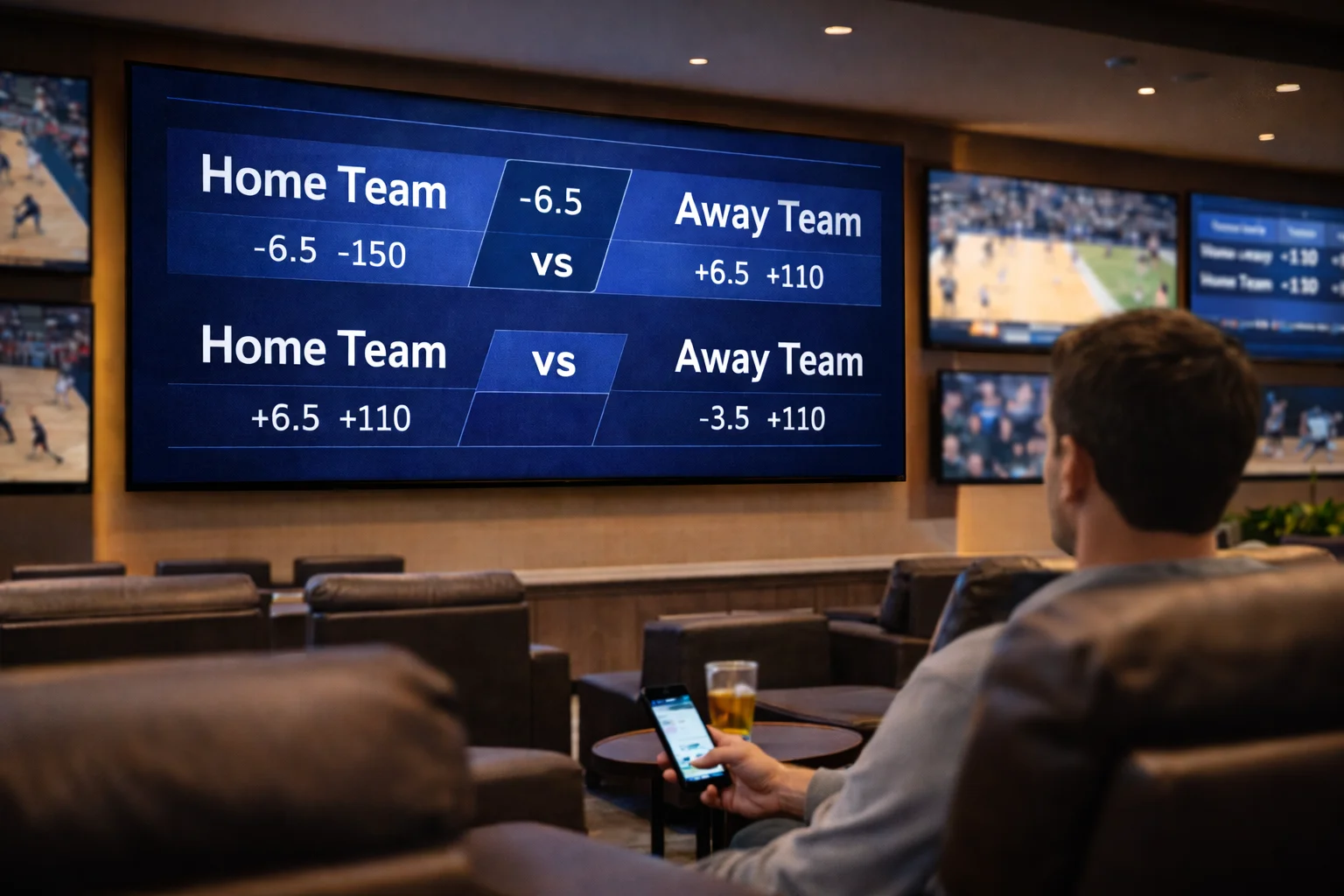
At the core of NBA betting sits the concept of the vig, sometimes called juice or vigorish. This is the commission sportsbooks charge for taking your bet. In most standard bets, you will see odds of -110 on each side, meaning you need to risk 110 dollars to win 100 dollars. That 10-dollar difference is how sportsbooks make money regardless of which team wins. This vig means that over the long term, you need to win more than 50 percent of your bets just to break even. At standard -110 odds, the break-even win rate is approximately 52.4 percent.
American odds use the plus and minus format that confuses many newcomers. A minus sign indicates the favorite and shows how much you must risk to win 100 dollars. If the Lakers are listed at -150, you would need to bet 150 dollars to profit 100 dollars if they win. A plus sign indicates the underdog and shows how much you would profit on a 100-dollar bet. If the Pistons are listed at +130, a 100-dollar bet returns 130 dollars in profit plus your original stake if they pull off the upset.
The calculation for potential payouts is straightforward once you understand the system. For negative odds, divide the odds by 100, then divide your stake by that number to find your potential profit. For positive odds, divide the odds by 100, then multiply by your stake. A 50-dollar bet on +130 odds yields 65 dollars in profit: 130 divided by 100 equals 1.3, and 1.3 times 50 equals 65.
Sportsbooks typically release NBA lines anywhere from 12 to 48 hours before game time, though some markets like futures are available months in advance. The timing varies by sportsbook and by the specific market. Regular season games often see lines posted the morning of the previous day, while playoff lines might appear even earlier due to the fixed schedule. Learning when your preferred sportsbook releases lines is part of developing a betting routine, especially if you want to capture favorable numbers before they move.
The relationship between odds and implied probability is crucial for identifying value. Odds represent the sportsbook’s assessment of likelihood, but those assessments are not always accurate. When you believe an outcome is more likely than the odds suggest, you have found what bettors call positive expected value. This concept drives professional sports betting and separates recreational bettors who lose money over time from those who can maintain profitability.
NBA Bet Types: From Moneyline to Parlays
The NBA offers a wider variety of betting options than most sports, and understanding each type helps you find markets that match your knowledge and risk tolerance. Some bets are straightforward predictions while others combine multiple outcomes for bigger potential payouts and correspondingly higher risk.
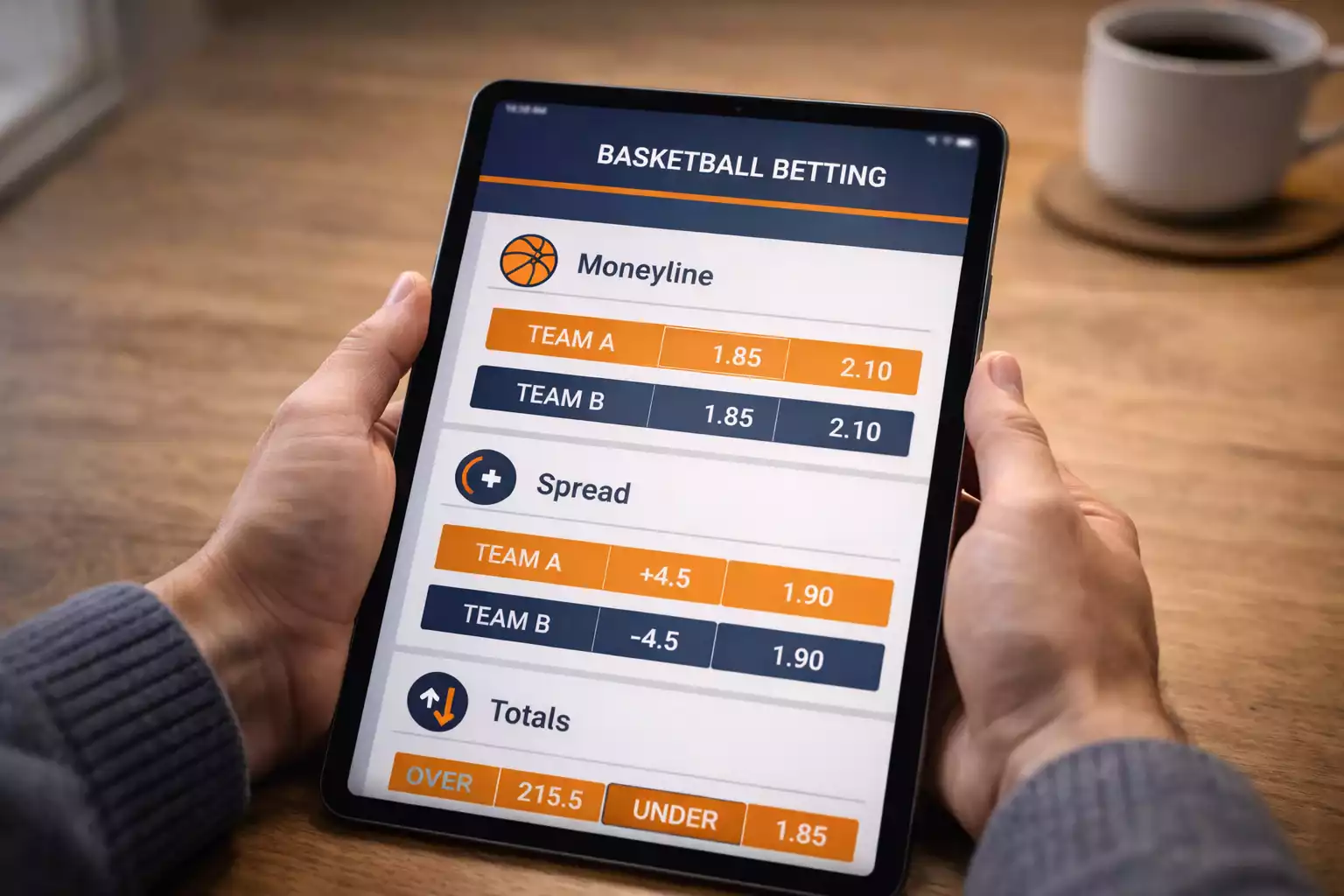
Moneyline Bets
The moneyline is the simplest bet in basketball. You pick which team wins the game, and that is it. No point spreads, no total scores, just identifying the winner. Despite its simplicity, moneyline betting requires careful analysis of odds to find value.
Moneyline odds reflect the perceived gap between teams. When the Celtics host the Hornets, you might see Boston at -320 and Charlotte at +260. These extreme numbers tell you the sportsbook views this as a significant mismatch. Betting 320 dollars on Boston to win just 100 dollars feels like a lot of risk for modest reward, but the implied probability of a Celtics win at those odds exceeds 76 percent. If you believe Boston wins this game 80 percent of the time, the bet holds value despite the steep price.
Underdog moneylines often present the best opportunities for profit. That +260 on Charlotte means a 100-dollar bet returns 260 dollars if they win. Upsets happen in the NBA with surprising regularity. Over the past decade, underdogs have won roughly 30 percent of regular season games. The key is finding spots where the underdog’s true win probability exceeds what the odds imply.
The best moneyline values often appear in scenarios where public perception differs from reality. Teams coming off embarrassing losses might see inflated underdog lines the following game. Squads playing the second night of a back-to-back might be undervalued because the public assumes fatigue will hurt them more than it actually does. Moneyline betting rewards bettors who can spot these discrepancies.
Point Spread Betting
Point spread betting levels the playing field between mismatched opponents by requiring the favorite to win by more than a specified margin. This remains the most popular form of NBA betting because it makes nearly every game competitive from a wagering perspective.
When you see Lakers -6.5 against the Jazz, the Lakers must win by seven or more points for a bet on them to cash. Conversely, a bet on Utah +6.5 wins if the Jazz win outright or lose by six points or fewer. That half-point eliminates the possibility of a push, which occurs when the margin lands exactly on the spread number.
Spreads move throughout the day based on betting action and news. An opening line of -6.5 might move to -7 or -7.5 if heavy action comes in on the favorite. It could drop to -6 or -5.5 if the underdog receives most of the bets or if significant injury news breaks. Tracking these movements helps you understand where the money is flowing and whether the closing line offers value compared to the opener.
Covering the spread requires thinking beyond who wins. A team can dominate a game and still fail to cover if they let off the gas in the fourth quarter. Garbage time is the enemy of spread bettors backing favorites. When a team builds a 20-point lead, starters often rest and the lead shrinks against opposing reserves. This phenomenon makes NBA spreads notoriously volatile compared to other sports.
Key numbers in NBA spreads are less pronounced than in football but still matter. Margins of five, six, and seven points occur more frequently than others. Getting the Lakers at -6 instead of -7 might not seem significant until you track how many games land on those exact margins over a season. Small edges compound over hundreds of bets.
Over/Under Totals Betting
Totals betting focuses on the combined score of both teams rather than which team wins. The sportsbook sets a number, and you bet whether the actual combined score will exceed that total or fall below it. In a game with a total of 224.5, the over hits if the teams combine for 225 or more points, while the under wins at 224 or fewer.
Pace of play is the dominant factor in totals analysis. Teams that push the tempo and create more possessions generally produce higher-scoring games. When the Kings host the Cavaliers, you are looking at a matchup between a historically fast-paced offense and a methodical, defense-first approach. The total will reflect this stylistic clash, but understanding how these dynamics interact helps you evaluate whether the number is accurate.
Defensive efficiency matters as much as offensive firepower. Some high-scoring teams achieve that output through volume rather than efficiency, taking many shots but converting at league-average rates. Their games might not go over as often as you expect because they also allow opponents to score freely. Conversely, elite defensive teams can suppress totals even against offensive juggernauts by limiting possessions and forcing difficult shots.
Weather does not affect indoor basketball, but travel and fatigue certainly do. Back-to-back games, especially the second of a road back-to-back, tend to feature lower scores as tired legs produce missed shots and reduced defensive intensity. The sportsbook adjusts totals for these situations, but their adjustments might not fully capture the impact in specific matchups.
Parlays and Same-Game Parlays
Parlays combine multiple bets into a single wager where all selections must win for the bet to cash. The appeal is obvious: combining three bets at -110 each into a parlay offers roughly +600 odds, turning a 100-dollar bet into a 700-dollar return. The catch is equally obvious: if any leg loses, the entire parlay loses.
Traditional parlays link outcomes from different games. You might combine the Celtics spread, the Nuggets moneyline, and the under in the Suns-Warriors game. The odds multiply together, creating payouts that grow exponentially with each added leg. Sportsbooks love parlays because the house edge compounds with each selection. A two-team parlay gives the book about a 10 percent edge, while a five-team parlay pushes that edge toward 25 percent or higher.
Same-game parlays have become one of the most marketed betting products in recent years. These allow you to combine multiple outcomes from a single game, such as the Lakers to win, LeBron to score over 25.5 points, and the game to go over 218.5. The correlated nature of these outcomes means sportsbooks adjust the odds downward. If the Lakers win big, LeBron probably played well and the total likely went over. The book accounts for this correlation in pricing.
Using parlays strategically requires understanding that their entertainment value exceeds their mathematical value. The occasional big hit feels great, but consistent profitability is extremely difficult with parlays. Sharper bettors sometimes use small parlays of two or three legs with correlated outcomes, but they avoid the lottery-ticket five and six-leg combinations that drain bankrolls over time. Parlays work best as a small portion of your betting portfolio rather than your primary strategy.
NBA Player Prop Betting Guide
Player props shift the focus from team outcomes to individual performances. Rather than betting on whether the Mavericks cover the spread, you wager on whether Luka Doncic will score more or less than 31.5 points, grab more than 9.5 rebounds, or dish out over 8.5 assists. This granular approach appeals to bettors who follow specific players closely or spot mismatches the broader market overlooks.

The most common player props cover the traditional statistical categories. Points, rebounds, and assists dominate the market, but sportsbooks now offer lines on steals, blocks, three-pointers made, turnovers, and combined statistics like points-plus-rebounds-plus-assists. This expansion creates opportunities because sportsbooks cannot price every market with the same precision they bring to game lines.
Finding value in player props requires understanding matchups at a deeper level than team betting demands. A center averaging 12 rebounds per game might see his line set at 11.5, but if tonight’s opponent plays small and struggles on the defensive glass, that number could be too low. Similarly, a scoring guard facing a team that switches everything and defends without help might see inflated production compared to his season average. These situational edges are where player prop bettors make their money.
Usage rates and minutes projections drive player props more than raw talent. A backup point guard with excellent skills means nothing if he plays 18 minutes per game. Blowouts present another risk: stars get pulled in lopsided games, killing their stat accumulation. Checking projected game spreads before betting player props helps you avoid scenarios where your player might see reduced minutes due to the score getting out of hand.
Combination props like PRA (points-rebounds-assists) offer higher totals with theoretically more consistent outcomes, but the juice on these markets can be steep. Some bettors prefer targeting specific categories where they have strong opinions rather than accepting worse odds on combination stats. Others find that the variance reduction makes combination props more predictable. Your approach should match your research process and conviction level.
Sportsbooks have become more sophisticated at pricing player props, but inefficiencies remain. The sheer volume of props offered means some lines receive less attention from oddsmakers. Compare props across multiple sportsbooks and you will often find discrepancies of a full point or more on the same player. Shopping for the best number is essential in player prop markets where margins are slim.
One common mistake in player prop betting is ignoring the correlation between player performance and game environment. A fast-paced, high-scoring game benefits offensive players across the board. If you bet the over on a scoring prop and the game total also goes over, those outcomes are positively correlated. Sportsbooks account for some of this correlation in same-game parlays, but understanding these relationships helps you structure bets more effectively.
NBA Futures: Championship, MVP and More
Futures betting extends your timeline from individual games to entire seasons. These long-term markets let you stake a position on championship winners, conference champions, division winners, award recipients, and season win totals before the outcomes are determined. The extended timeline creates both opportunities and challenges that differ substantially from game-by-game betting.
Championship futures are the flagship product. Before the season starts, every team has odds reflecting their perceived probability of winning it all. Favorites might be priced at +350 or +400, while rebuilding teams sit at +50000 or longer. The beauty of championship futures is that you can lock in a price before the season validates or contradicts preseason expectations. A team that starts 20-5 will see their title odds shorten dramatically, but if you bought them at +1200 in October, you hold a valuable position.
Conference winner futures operate similarly but with shorter odds since only half the league competes. Division futures offer even shorter prices, often hovering around -200 to +400 for most divisions depending on the competitive balance. These smaller-scope futures can serve as hedging tools or standalone plays when you have strong opinions about a team’s regular season performance without confidence in their playoff prospects.
MVP betting has become increasingly sophisticated and popular. The race typically involves five to eight serious contenders, with odds shifting throughout the season based on individual performance and team success. Betting MVP futures requires understanding the criteria voters historically prioritize: individual statistics, team record, narrative appeal, and positional considerations all factor into the final vote. Players on losing teams rarely win regardless of their individual brilliance, while some candidates receive bonus consideration if their team exceeds expectations.
Other award markets include Rookie of the Year, Defensive Player of the Year, Sixth Man of the Year, and Most Improved Player. Each award has its own quirks and voting tendencies. DPOY often goes to centers or forwards with high block totals and team defensive success. Sixth Man usually rewards the most productive bench scorer. Understanding these patterns helps you identify mispriced candidates early in the season before their odds shorten.
Season win totals represent one of the most straightforward futures markets. The sportsbook sets a number for each team, and you bet whether they will win more or fewer games than that figure. A team with a win total of 48.5 needs to go 49-33 or better to hit the over. These markets reward bettors who can accurately project rest schedules, injury impacts, and roster construction better than the oddsmakers.
The timing of futures bets matters enormously. Championship odds are typically longest during the offseason when uncertainty is highest. They tend to shorten as the season progresses and the contender pool becomes clearer. Conversely, some award markets offer better value midseason when a player emerges as a candidate that was not on the preseason radar. Developing a feel for optimal entry points is part of mastering futures markets.
A futures ticket that reaches the Finals presents one decision: take the guaranteed money or let it run. The arithmetic behind that choice is short, and it resolves into a single number you can compare against your own opinion.
| Hedge size | Stake on opponent | If your team wins | If they lose | Expected value |
|---|---|---|---|---|
| No hedge | £0 | +£2.500 | −£100 | £1.200 |
| Quarter hedge | £355 | +£2.145 | +£195 | £1.170 |
| Half hedge | £710 | +£1.790 | +£490 | £1.140 |
| Three-quarter hedge | £1.066 | +£1.434 | +£784 | £1.109 |
| Full hedge | £1.421 | +£1.079 | +£1.079 | £1.079 |
The elegant part of this calculation is what the break-even number turns out to be. It is exactly the probability the opponent’s price implies for your team. Hedging is expected-value neutral precisely when you agree with the market, better than riding when you think your team is weaker than the price suggests, and worse when you think they are stronger. That reduces a decision people agonise over to one question: do you rate your team above or below what the current market says? Everything else is preference about variance rather than mathematics. Two practical points the table makes clearer than prose. Partial hedging is not a compromise between two strategies, it is a continuous dial, and the expected value falls smoothly as you turn it. A quarter hedge on this position still leaves £2.145 on a win while converting the downside from a £100 loss into a £195 gain — for £30 of expected value. That is often the shape people actually want when they say they want to hedge. Second, note that the cost of a full hedge here is around ten percent of the position’s value, and that figure grows as the price on the opponent shortens. If your team becomes a heavy favourite in the Finals, hedging gets expensive fast, because you are buying insurance against an outcome the market considers unlikely. One caveat on the model: the opponent’s price contains the bookmaker’s margin, so the true break-even probability sits slightly below the figure shown. That gap works in favour of riding, not hedging. Nothing here accounts for tax treatment or the fact that a guaranteed return has real value beyond its expectation if the sum matters to you. More in the guides to futures markets and hedging, value and strategy and live betting. 18+, bet responsibly; BeGambleAware.
Hedging championship futures represents a legitimate strategy as the playoffs progress. If you bought the Thunder at +2500 before the season and they reach the Finals, you hold a position worth far more than you paid. You can let it ride or hedge by betting against them in the Finals to guarantee profit regardless of outcome. The mathematics of hedging are straightforward, but the emotional discipline to lock in smaller guaranteed gains over potential larger returns requires practice.
In-Game NBA Betting Strategies
Live betting transforms passive viewing into an active decision-making process where odds update continuously based on game action. The spread you saw at tip-off might shift ten points by halftime depending on how the game unfolds. This dynamic environment creates opportunities that pregame markets cannot offer, but it also introduces unique challenges that reward preparation and discipline.

The mechanics of live betting are straightforward. Sportsbooks update odds during gameplay, typically pausing during free throws, timeouts, and commercial breaks. You can bet on updated spreads, new totals, moneylines reflecting the current score, and various in-game props. The speed of these markets means you often have seconds to evaluate and place a bet before the odds change again.
Momentum shifts provide the best live betting opportunities. Basketball is a game of runs, and public perception often overreacts to short-term fluctuations. When a team hits four consecutive three-pointers to cut a deficit from 18 to 6, live odds shift dramatically toward that team. But shooting regression is real. A team that just went 4-for-4 from deep is not actually more likely to continue that pace. Bettors who recognize when odds have overcorrected during a run can find significant value.
Quarter and half betting offer structured entry points during live action. First-quarter spreads and totals allow you to bet on early-game performance without committing to the full 48 minutes. These markets appeal to bettors who want to fade slow-starting teams or target specific matchups before rotations muddy the picture. Second-half betting lets you reassess based on first-half performance and coaching adjustments.
Foul trouble creates betting opportunities that sharp live bettors monitor closely. When a team's best player picks up his third foul early in the second quarter and goes to the bench, that team's live odds worsen immediately. But the impact of foul trouble is often overstated, especially if the player eventually stays out of foul trouble or the backup performs adequately. Identifying overreactions to foul situations is a repeatable edge in live markets.
The biggest danger in live betting is chasing. Watching a game where you have action can trigger emotional decisions: doubling down when your team falls behind, hedging prematurely when they take the lead, or adding bets simply because you are engaged with the action. Establishing rules before the game starts helps combat these tendencies. Decide what scenarios would trigger a live bet and at what odds you would act. Discipline matters more in live betting than in any other market.
Successful live bettors often watch games without pregame positions to maintain objectivity. When you have already bet one side, your brain looks for evidence supporting that bet and dismisses contradictory information. Watching without bias allows cleaner evaluation of live opportunities. Some bettors reserve their entire NBA bankroll for live markets, finding more value in real-time analysis than in pregame predictions.
Proven NBA Betting Strategies for Success
Profitable NBA betting requires more than luck and basketball knowledge. It demands a systematic approach that identifies value, manages risk, and maintains discipline through inevitable losing stretches. The strategies that follow provide a framework for approaching NBA betting with the rigor it requires.
Research-Based Approach
Statistical analysis separates serious bettors from casual ones. Modern basketball analytics provide granular data on offensive and defensive efficiency, pace, shooting percentages from every zone, and performance splits across countless variables. Leveraging this data helps you form independent opinions about team quality and game outcomes rather than relying solely on record and reputation.
Offensive and defensive rating measure points scored and allowed per 100 possessions, normalizing for pace. A team averaging 115 points per game might seem elite, but if they play at the fastest pace in the league and allow 116 per game, they are actually mediocre. Net rating combines these metrics to show the point differential per 100 possessions. Teams with top-five net ratings are legitimate title contenders; those near the bottom are worse than their records often suggest.
Injury tracking is non-negotiable for NBA bettors. Basketball relies on star players more than any other major sport. A team missing its top scorer might see its spread shift from -6 to -1 based on a single absence. Sportsbooks react quickly to injury news, but the first bettors to act on new information capture the most value. Following injury reporters on social media and refreshing injury reports frequently gives you an edge over bettors who only check lines casually.
Situational Betting
Schedule spots present systematic advantages that analytics can quantify. Back-to-back games disadvantage the team playing their second consecutive night, with research suggesting a point or more of impact depending on travel distance and opponent rest advantage. Betting against tired teams or backing them when the market has overcorrected for fatigue provides consistent opportunities throughout the season.
Home court advantage has diminished in recent years but still matters, particularly for certain teams. Elevation in Denver affects visitors, rowdy crowds in specific arenas impact performance, and the simple reality of sleeping in your own bed versus a hotel room contributes to measurable home edge. The conventional estimate of three points for home court may overstate the actual advantage in 2026, but ignoring it entirely leaves value on the table.
Revenge narratives capture public attention but offer questionable betting value. A player facing his former team might be motivated, or he might press and play poorly trying to prove a point. Teams coming off embarrassing losses might rally or might continue struggling. These narratives provide entertainment but should not override statistical analysis. If the numbers support the narrative, bet accordingly. If they contradict it, trust the data.
Line Shopping and Timing
Every serious NBA bettor maintains accounts at multiple sportsbooks. The difference between getting -5.5 and -6 on a spread seems minor until you track how many bets land on those exact margins over a full season. Line shopping turns marginal losses into pushes and pushes into wins. The mathematical advantage compounds over hundreds of bets into significant profit differences.
Line movement tells a story if you learn to read it. Sharp bettors tend to act early when they spot value, so moves immediately after opening lines suggest informed money. Later moves often reflect public betting patterns, with favorites and overs traditionally attracting casual action. Understanding these patterns helps you decide when to place your bets. Sometimes getting the opening number is crucial; other times waiting for public money to push the line in your favor makes sense.
Optimal timing varies by market and situation. For nationally televised games with heavy public interest, waiting often yields better numbers on underdogs as the public piles onto favorites. For smaller markets with less liquidity, grabbing the opening line before any movement might be wiser. Developing intuition for timing requires tracking your own results and noting when waiting helped or hurt your positions.
Managing Your NBA Betting Bankroll
Bankroll management separates successful long-term bettors from those who eventually bust out. Your edge on any individual bet is small, which means variance can create extended losing streaks even when you are making good decisions. A bankroll strategy absorbs those swings and keeps you in action long enough for your edge to materialize.
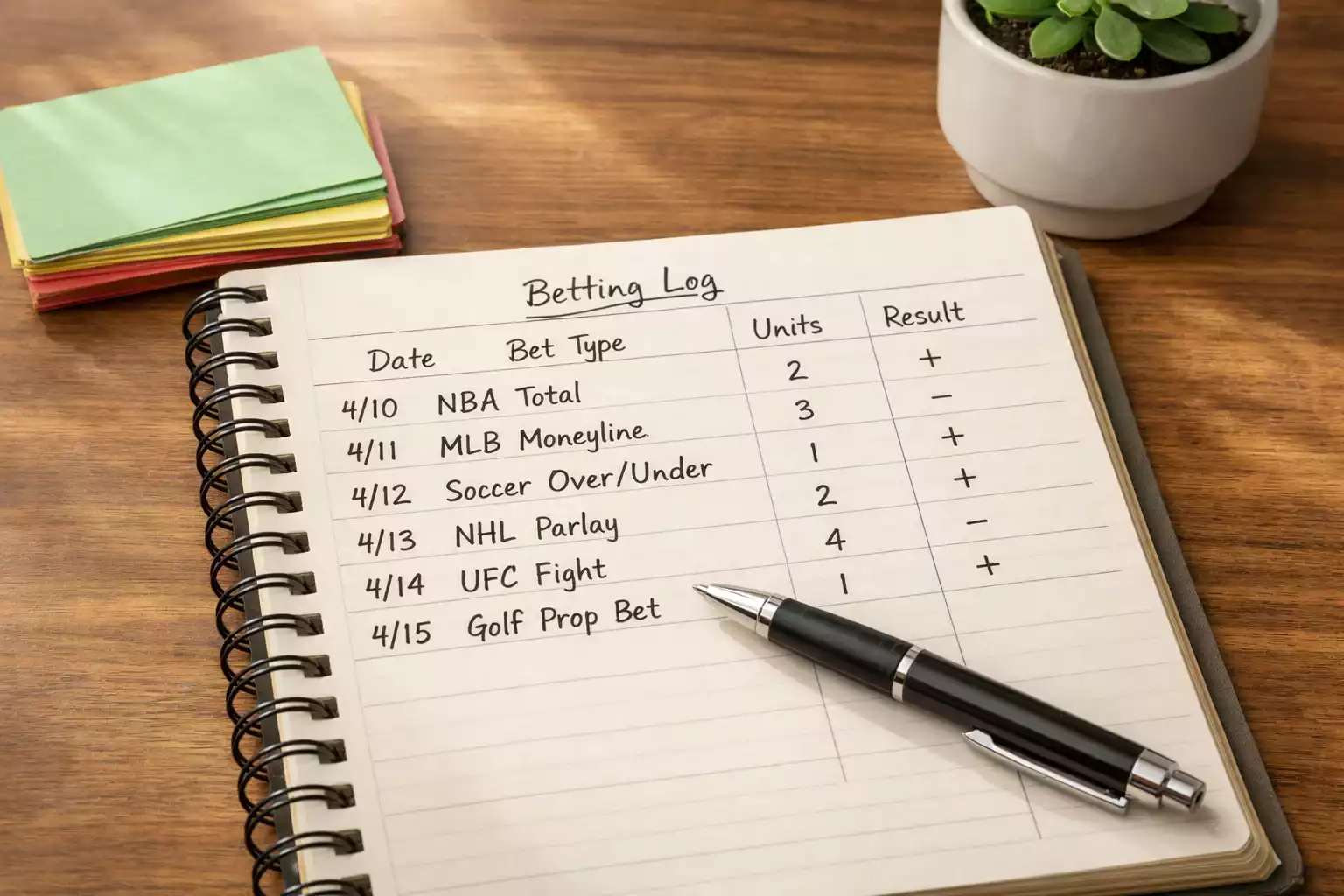
Start by establishing a dedicated bankroll that is completely separate from your living expenses. This amount should represent money you can genuinely afford to lose without impacting your lifestyle or financial obligations. For most recreational bettors, this might range from a few hundred to a few thousand dollars. The specific amount matters less than your commitment to treating it as your total budget for NBA betting.
Unit-based betting provides a framework for consistent sizing. One unit typically represents one to two percent of your total bankroll. If your bankroll is 2000 dollars, one unit would be 20 to 40 dollars. Betting in units rather than arbitrary amounts prevents emotional sizing where you might risk 200 dollars on one game because you feel confident and 25 dollars on another. Consistency in sizing is essential because you cannot predict which specific bets will win.
Flat betting means wagering the same amount on every bet regardless of confidence level. This approach is the safest and most recommended for newer bettors. It prevents the common mistake of sizing up on losses to try to get even, a behavior that accelerates bankroll depletion. Some experienced bettors use tiered systems where they bet two or three units on their strongest plays, but this requires proven track record and genuine edge identification to work.
Avoiding chase scenarios requires explicit rules established before any betting session. After two or three losses in a single day, many bettors feel the urge to place additional bets to recover. This chase mentality has destroyed more bankrolls than any string of bad luck. Setting a daily or weekly betting limit in terms of number of bets or total units risked prevents emotional decisions from compounding bad days.
Record keeping transforms vague impressions into actionable data. Track every bet including the odds you received, the closing line, and the result. Over time, you can analyze which bet types produce positive returns and which drain your bankroll. You might discover that your spread betting is profitable while your parlays consistently lose, allowing you to adjust your approach accordingly.
The 82-game NBA regular season offers enough volume that a two or three percent edge becomes meaningful over time. Playoff betting provides fewer games but often sharper markets, requiring different bankroll considerations. Planning your bankroll allocation across the season helps avoid the common mistake of depleting your funds during the regular season grind and having nothing left for the playoffs when you might have the best opportunities.
When to Bet: NBA Calendar Breakdown
The NBA calendar presents different betting environments that require adjusted approaches. What works in November might not work in April, and playoff betting differs fundamentally from regular season wagering. Understanding these seasonal patterns helps you allocate attention and bankroll more effectively.
The regular season spans from October through mid-April, offering roughly 1,230 games across 82 contests per team. This volume creates abundant betting opportunities but also presents unique challenges. Early season lines are less reliable because sportsbooks and bettors alike are still calibrating rosters, new player acquisitions, and coaching changes. The betting market sharpens as the season progresses and larger sample sizes reveal actual team quality.
November through January represents the most stable period for regular season betting. Teams have established rotations, early-season variance has smoothed out, and load management has not yet become a significant factor. Line accuracy tends to be highest during this window, meaning finding value requires genuine edge rather than market inefficiency. This stretch rewards bettors with strong analytical processes.
The All-Star break in February provides a natural inflection point. Teams return from the break with varying levels of freshness and focus. Some push hard toward playoff positioning while others coast. Minutes distributions shift as teams evaluate young players or rest veterans ahead of the playoff push. Betting around the All-Star break requires attention to these changing team priorities.
March and April bring increased rest patterns and load management as playoff positioning solidifies. Teams locked into seeds might sit starters in meaningless games, creating significant line movement opportunities for attentive bettors. Conversely, teams fighting for playoff spots or seeding play their starters heavy minutes and treat every game with postseason intensity. Identifying which teams fall into each category is crucial during this stretch.
The play-in tournament in mid-April compresses high stakes into a small number of games. The seventh through tenth seeds in each conference compete for the final two playoff spots, with the seventh and eighth seeds getting two chances to advance while the ninth and tenth seeds must win consecutive games to qualify. These games combine playoff intensity with regular season uncertainty about rotations and strategies. The betting market often struggles to price these games correctly due to their unique format and stakes.
Playoff betting from mid-April through June fundamentally differs from regular season wagering. Series formats allow adjustments between games, meaning the team that wins Game 1 might not accurately reflect the better team. Sportsbooks have more time to set accurate lines, and the betting public concentrates more attention on fewer games. Edges become harder to find but potentially larger when they exist. Increased focus on matchups, coaching adjustments, and rest advantages shapes playoff betting strategy.
The NBA Finals in June represent the pinnacle of the betting calendar. Public interest peaks, line accuracy is highest, and recreational money floods the market. These games are often the hardest to find value in but also attract the most betting volume. Sharp bettors sometimes step back during the Finals while casual bettors chase the excitement of the biggest stage.
Frequently Asked Questions About NBA Betting
How do NBA betting odds work, and what do the plus and minus signs mean?
NBA odds use the American format where minus signs indicate favorites and plus signs indicate underdogs. A team listed at -150 requires a 150-dollar bet to win 100 dollars in profit. A team at +130 returns 130 dollars profit on a 100-dollar bet. These numbers reflect the sportsbook's assessment of probability: -150 implies roughly 60 percent win probability, while +130 implies about 43 percent. Understanding these conversions helps you evaluate whether the odds represent good value compared to your own probability estimates.
What is the best type of NBA bet for beginners?
Moneyline bets offer the clearest path for newcomers because you simply pick the winner. Point spread betting adds complexity by requiring the favorite to win by a certain margin. Starting with moneylines lets you learn how odds work without immediately mastering spread dynamics. Once comfortable with moneylines, spread betting opens more opportunities since it makes mismatched games competitive. Avoid parlays and exotic props initially; these markets carry higher house edges and require more sophisticated analysis to beat consistently.
Can you consistently make money betting on NBA games?
Consistent profitability requires winning approximately 53 percent of spread bets at standard -110 odds. This margin is achievable but demands rigorous discipline, sound bankroll management, and genuine analytical edge. Most recreational bettors lose money over time because the vig erodes profits and emotional decisions compound losses. Professional bettors treat wagering as a job with systematic processes, detailed record-keeping, and acceptance that losing weeks and months are inevitable even with long-term edge. Success is possible but requires treating betting as a serious endeavor rather than casual entertainment.
Conclusion
NBA betting offers remarkable depth for those willing to invest time in understanding its mechanics. From simple moneyline wagers to complex futures positions, the market provides entry points for every skill level and risk tolerance. The key principles remain consistent regardless of which markets you pursue: understand the odds, identify value, manage your bankroll conservatively, and maintain discipline through inevitable variance.
The 82-game regular season followed by a two-month playoff run provides more than enough volume to test and refine your approach. Start with straightforward bets, track your results meticulously, and expand into additional markets only after demonstrating proficiency in the basics. Remember that sustainable success comes from process rather than outcomes. A losing bet on sound analysis is better than a winning bet on gut feeling because good processes produce long-term profits while luck evens out.
Always bet responsibly with money designated specifically for entertainment purposes.
Published by the nba Betting team.